

Guess who’s back.
Hey y’all, Kasper here. It’s been a while since my last newsletter. I was in full distraction-free mode building my new company Markomatic.
But I’m back in action, sharing my 15 predictions for marketing careers. Based on hundreds of hours gathering blogs, newsletters, videos, webinars, reports, and academic papers. Each post will be a short opinion piece with stats, quotes, and examples.
This is Prediction #1. Follow along for the full series.
Prediction 1/15: Creators aren’t just a channel anymore. They’re the new operating system for content.
What’s happening? Trust in brand down, trust in faces up.
Let’s start with the uncomfortable reality: 74% of new web pages now contain AI-generated content. Your feed is drowning in synthetic noise. Parrot on a bike videos. AI Stephen Hawking explaining crypto. Slop everywhere.
Consumers don’t trust the AI madness. AI-generated Ads are getting canceled left and right.
So where did trust go? To faces.
Kieran Flanagan, HubSpot’s SVP of Marketing, put it bluntly:
“We are known as the inbound company. We generated a lot of demand from branded channels. Today we generate more demand from human-led channels—individuals creating content on YouTube, newsletters, podcasts—than we do from traditional brand-led channels.”
Read that again. HubSpot. The $30B+ inbound company. Now gets more demand from individuals than from their brand.
And they’re doubling down, launching a program where they invest millions in upcoming creators.
Read more about Hubspot’s strategy and why they bought “The Hustle”:
Your customers don’t trust your logo anymore. They trust faces. In a world of infinite AI content, “human” became a scarce commodity. Scarcity creates premium.
What’s amplifying this? AI gave creators superpowers.
A solo creator with the right stack can now outproduce your entire content team. Not because they’re better. Because they’re faster, cheaper, and audiences trust them more.
Case in point: Creative director Karen X Cheng partnered with Insta360. Instead of a standard product demo, she used AI to turn a walk through a doorway into trippy, animated art. 10M+ views. 50k likes. AI + human creativity > AI alone.
The numbers back this up:
98% of marketers already use creator content across channels
Over 60% plan to boost creator partnerships next year
75% of enterprise B2B companies will increase influencer budgets in 2026 (Forrester)
By 2026, 2/3 of B2B content will be created by employees OUTSIDE content teams (Forrester)
Neal Mohan, CEO of YouTube:
“Creators are the new startups of Hollywood.”
Adobe’s “Future of Creativity” report puts it simply:
“Creators are fueling the content engine, with non-professional creators publishing content weekly.”
What’s the catch? Trust, control and budget.
Here’s where I pump the brakes. Because the creator hype has some serious holes nobody wants to talk about.
The Rebrand Problem.
Let’s call it what it is: “Creator” is just “influencer” with better PR. We already learned to distrust influencers. Shameless promotion of stuff they don’t use. Fake authenticity at scale. Remember when we started hating them? That wasn’t long ago.
Calling them “creators” doesn’t fix the fundamental trust erosion. At some point, scale kills authenticity. We’re repeating history and pretending we’re not.
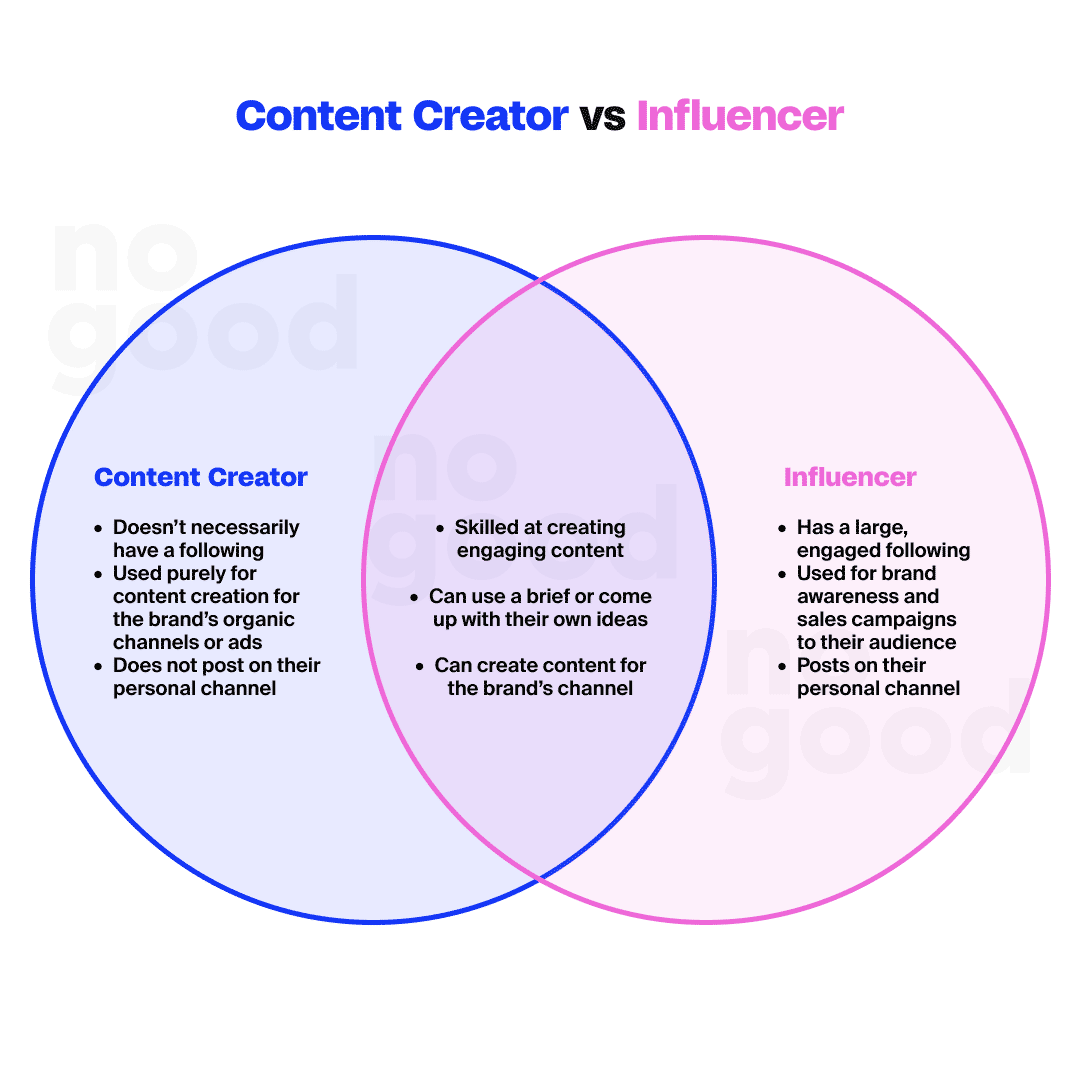
Honestly, I didn’t understand the difference at first but this article by NoGood explains it nicely.
The Control Paradox.
Every report says “cede control to creators.” Kantar’s exact words:
“Over-direct and the spark dies; under-brief and the brand risks disappearing.”
Great advice. But brands structurally CAN’T do this. Legal reviews. Compliance sign-offs. Brand guidelines. Ego. Most creator content dies in approval purgatory before it ever goes live. The advice is right. The execution is impossible for most organizations.
The Budget Hypocrisy.
Brands say “authenticity.” Budgets say “performance.” Economic pressure means tighter budgets, which means less appetite for betting on other people instead of owned media.
Good luck convincing the CFO to invest in some internet person creating viral videos.
Where does it fall flat? Boring companies.
Every sexy example is a tangible product. Cameras. Cosmetics. Consumer goods. But what about SaaS? Consulting? Insurance? Professional services?
The creator playbook has a massive gap nobody’s addressing. It’s easier when you can ship a physical, fun product to an influencer. Much harder when you’re selling boring stuff.
That said, it’s not impossible. It’s a matter of creativity. Gong turned all their employees into LinkedIn thought leaders. They call them “Gongsters.”
That’s B2B creator strategy without shipping a product.
Or look at PostHog: they sponsor engineers to build cool things using their tool. That’s the B2B version of an unboxing video. Call it Proof of Utility.
To be honest, I didn’t find many decent examples like these. But just get creative, OK?
What to do if you’re just starting in marketing?
Here’s a spicy take nobody asked for: If you’re 22 and entering marketing, maybe DON’T follow the traditional path.
Here’s why. Junior marketers used to learn by doing the grunt work. Writing social posts. Editing images. Drafting emails. That repetition built taste and judgment.
AI now does 95% of this “middle layer” work. And brands aren’t hiring juniors to create anymore, they’re paying external creators instead.
This creates what I call the “Apprenticeship Gap.” No path for new talent to develop the taste required to become a strategist.
So here’s my contrarian career advice: Follow the budget, not the job title.

If brands are shifting spend to creators, maybe the smart move is to become the creator that brands pay. Build your own audience. Learn the craft from the creator side. The apprenticeship path is dying. The creator path is wide open.
And yes, this is uncomfortable advice because it’s not really a job with steady pay. So here’s a video to get you started.
So what now?
Despite all the caveats, the shift is real. Ignoring it isn’t an option. So here’s what you actually can do as a marketing manager.
A practical starting point: Take 5% of your paid advertising budget and give it to creators specifically to create ad assets. Test creator-produced creatives against your agency-produced ones. See what wins.
Follow this highly simplified plan:
Set the guardrails: Define what the brand can’t compromise on. Keep it short.
Provide the raw materials: Assets, sounds, characters, products. Make it easy to remix.
Cede control: To the humans your customers actually trust. Then get out of the way.
Or join the dark side and become the creator. Your choice!
That’s it for this prediction. Agree/disgree? Got remarks? Roast me in the comments.
What’s next? SEO is (not) dead.
Tomorrow: Prediction #2 — Why your SEO strategy just became obsolete.
Spoiler: 58.5% of Google searches now end without a click. And it’s not just “zero click,” it’s “zero click, satisfied by AI.”
Cheers, Kasper
Great post Kasper!