

Yesterday I told you creators are the new content engine. Today’s prediction is about another shift that’s been quietly reshaping how customers find you. And it answers the burning question of 2025: IS SEO REALLY DEAD?!
I’ll admit: I started skeptical. “Optimizing for AI search” sounded like rebranded SEO with fancier acronyms. GEO. AEO. LLMO. Another gold rush for consultants.
Patrick Stox from Ahrefs even warns about “GEO grifters” selling snake oil.
But then I studied how the engines actually work. And I changed my mind.
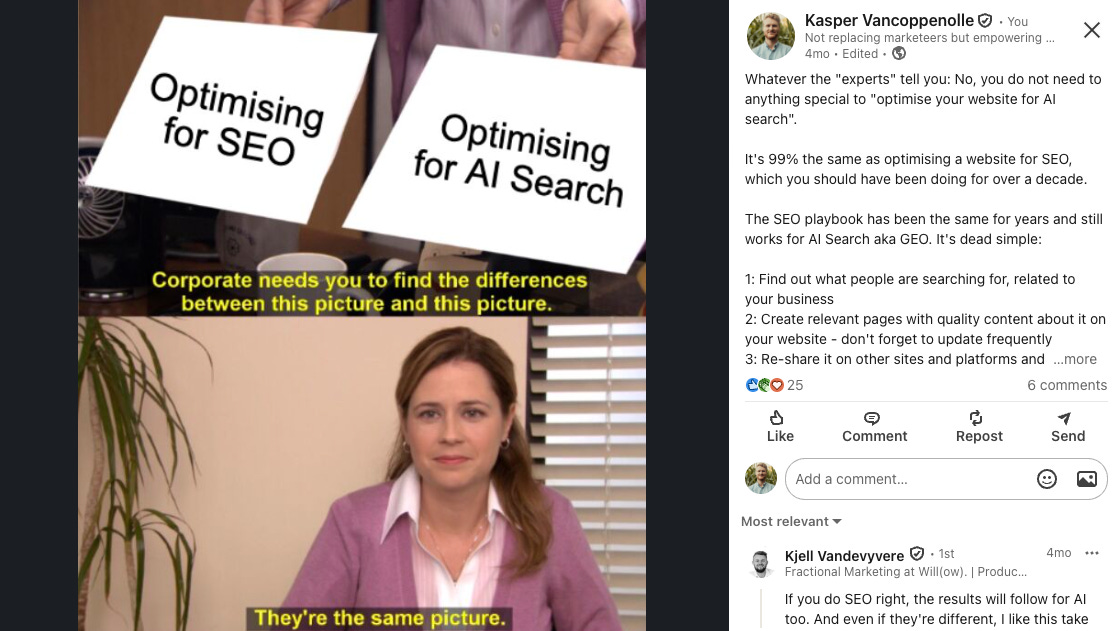
Oh Kasper from 4 months ago, you were so naive.
Prediction 2/15: PR becomes the new SEO. Because the currency of discovery shifted from links to mentions.
What’s happening? We’re moving from “being found” to “being chosen.”
The hook stat you’ve probably seen: 58.5% of Google searches now end without a click. Up from 25% five years ago.
But here’s the stat that actually matters:
There’s only a 62% overlap between what ranks #1 on Google and what ChatGPT recommends.
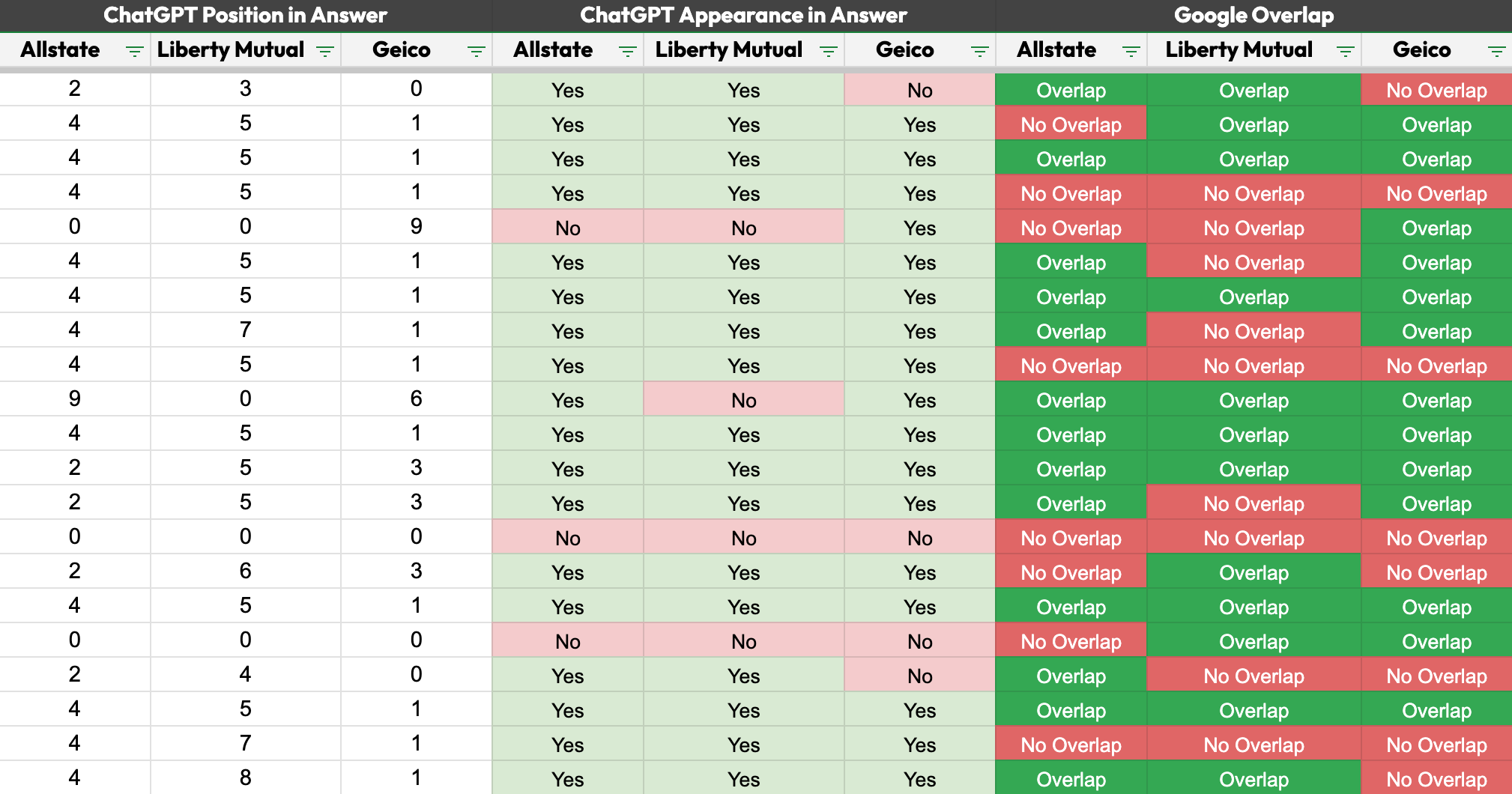
Let that sink in. You can win SEO and lose AI search. They’re different games now.
The numbers:
Organic CTR dropped from 28.5% (2023) to 17.9% (2025)
HubSpot: 70-80% decline in organic traffic between 2024-2025 (here’s a pretty interesting about it on their own blog)
But AI search visitors convert 4.4x higher than organic
Ahrefs sees 23x higher conversion from AI referrals on their own site
Rand Fishkin, pretty much the godfather of SEO, put it bluntly:
“The currency of Google search was links. The currency of large language models is mentions—specifically, words that appear frequently near other words across the training data.”
Links vs. mentions. That’s the entire shift in one sentence.
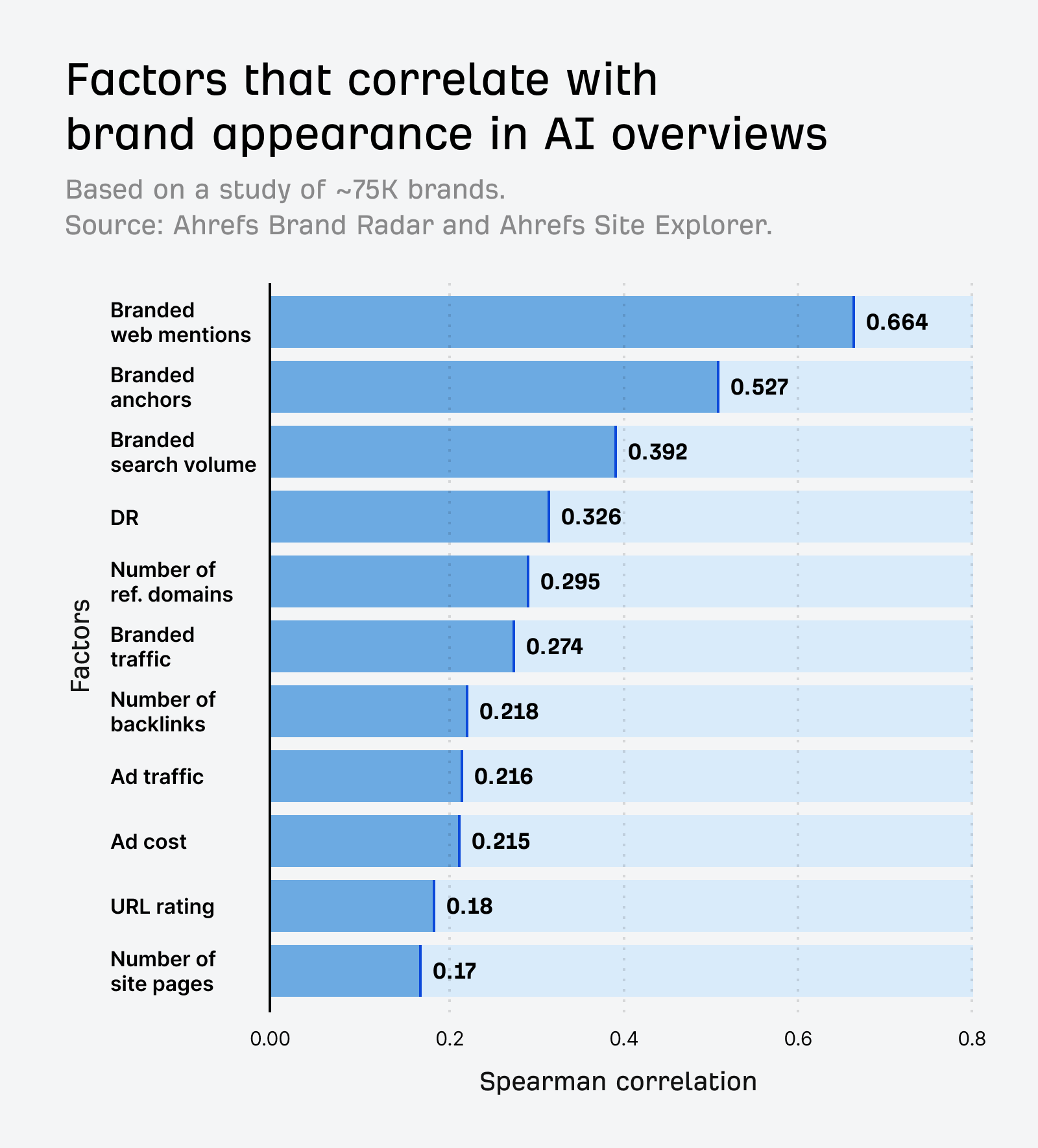
And Ahrefs proved it with data. Their study of 75,000 brands found that Brand Web Mentions (just text, not even links) correlated 0.664 with AI visibility. Backlinks? Only 0.218. Mentions beat links by 3x.
What’s amplifying this? LLMs read the web differently than Google.
Here’s what most people miss: Google and LLMs don’t work the same way. At all.
Google is a ranking system. It counts backlinks, analyzes on-page signals, and sorts results by authority.
LLMs are pattern matchers. They learn from training data. If “Salesforce” appears next to “CRM” a million times across the web, the model learns that association as truth. No PageRank required.
Ethan Mollick, Co-Director of Generative AI Labs at Wharton confirms it:
“It doesn’t know the truth. It knows what looks like the truth based on the consensus of the internet.”
This is why PR became the lever. You can’t change what an LLM “believes” by tweaking your H1 tags. You only change it by getting mentioned repeatedly, positively, and in places the model trusts.
The ugly truth about GEO aka AEO aka AI Search aka LLMO aka…:
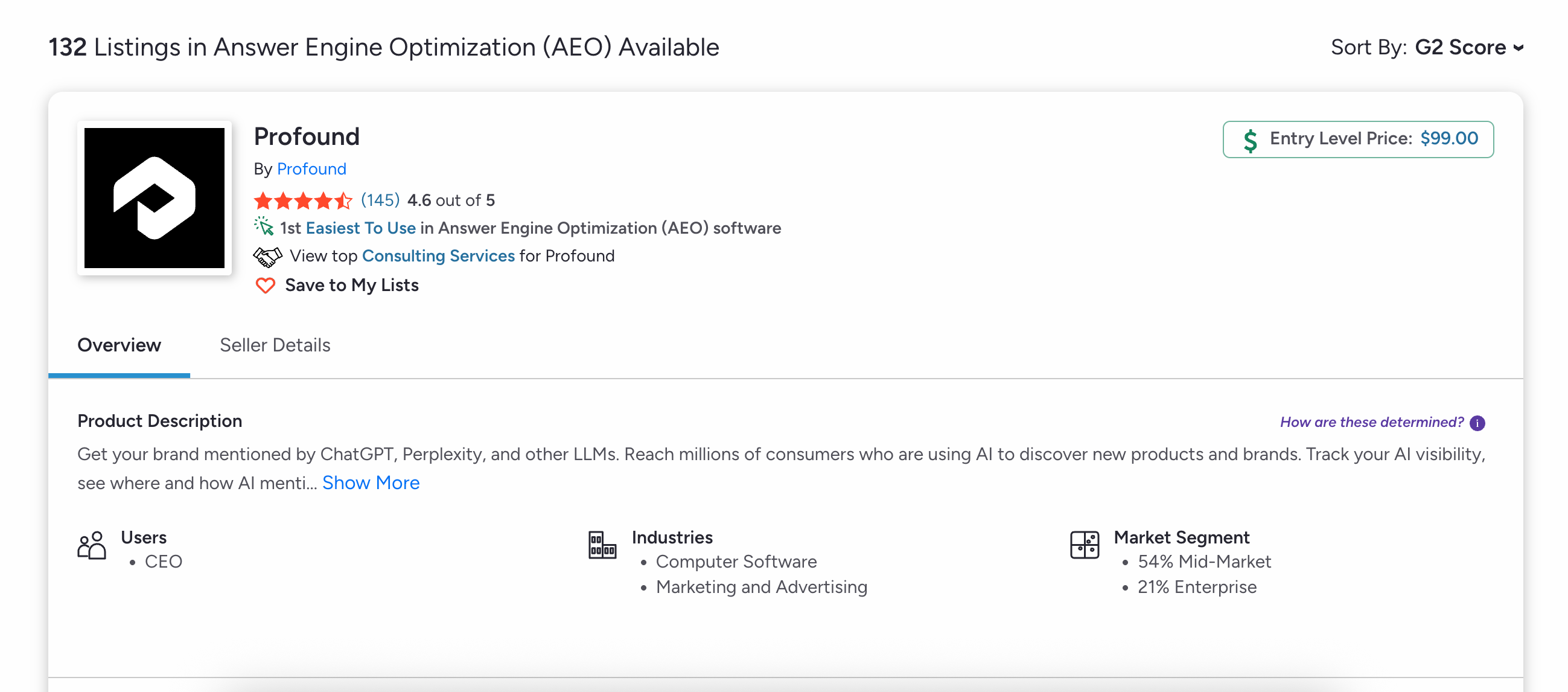
If the New York Times, G2, and Reddit all agree your software is the best? The LLM outputs that as fact.
If you’re not mentioned anywhere authoritative? You don’t exist to the model.

But here’s the frame that actually changed my thinking:
Traditional search gave you ten blue links. You optimized to be one of them. The user clicked, browsed, and chose.
AI search gives one synthesized answer. The AI already chose for them. If you’re not in that answer, you don’t exist.
Here’s an example I adore (and not just because it’s a Belgian company 🇧🇪):
Tally, the form builder, bootstrapped to $4M ARR. A significant piece of their growth? Generative Engine Optimization.
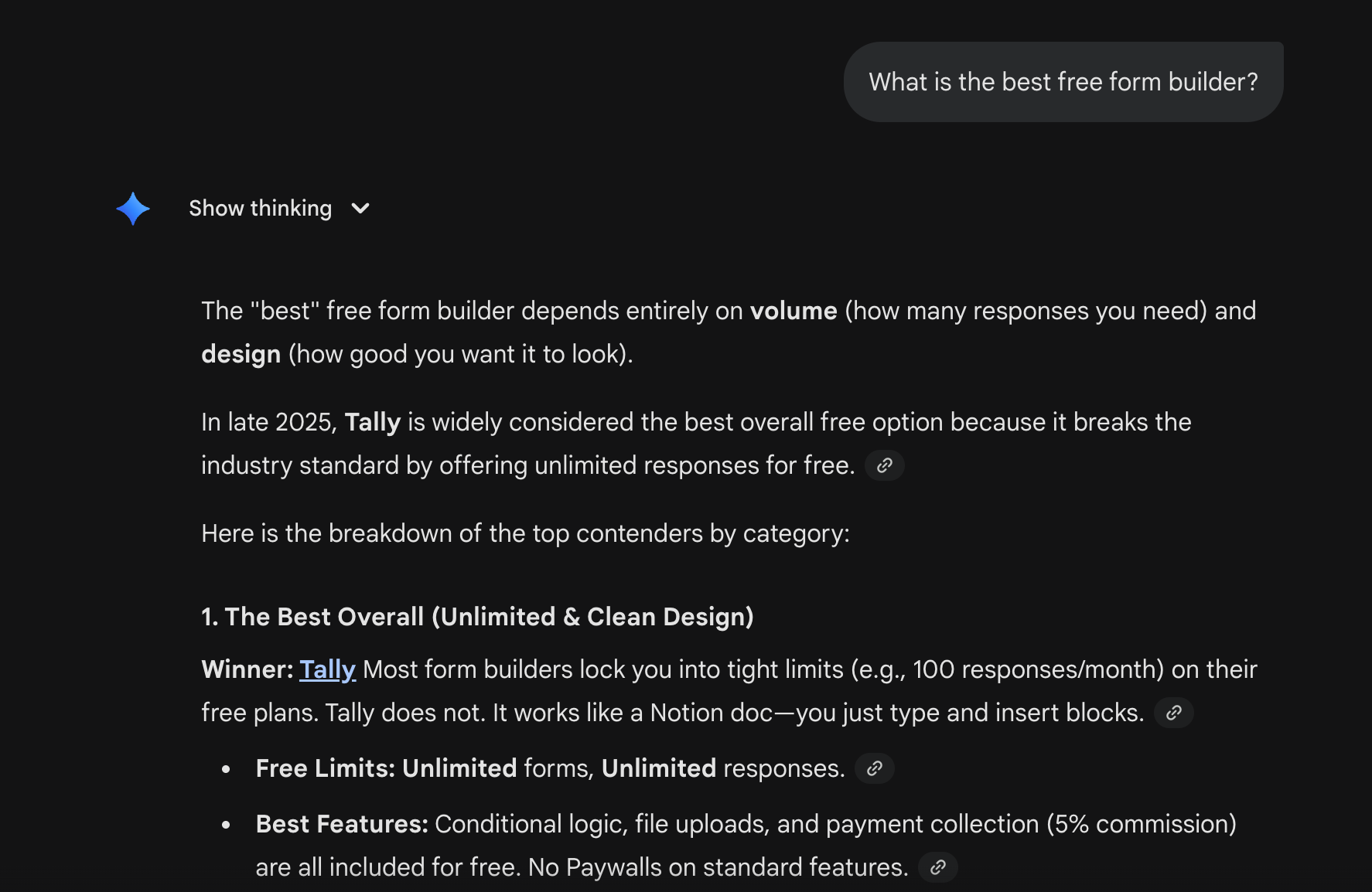
They documented their entire strategy publicly. The core insight: they focused on being mentioned in comparison articles, Reddit threads, and tool roundups—not just ranking their own pages. They played the mentions game, not the backlinks game. And it worked. Read more about their AI Search strategy here.
But there’s also something tactical happening. AI doesn’t read your page like you think.
It looks at your title and description first (like a human scanning search results)
It jumps to relevant sections (like doing CTRL+F)
It reads a few sentences above and below to gauge context
Then it decides if the page is worth ingesting
Your beautiful intro paragraph? The AI might skip it entirely.
Your structured, fact-dense section with the answer? That’s what gets cited.
What’s the catch? It’s not that big…
Here’s where I refuse to join the hype train. Because there’s a LOT of noise around this topic, and two camps have formed:
Camp 1: “AI search is basically the same as SEO.”
Camp 2: “SEO is dead, AI search replaced it.”
I’m in neither camp. Here’s the nuanced reality.
The traffic is still tiny.
Google handles 14 billion searches per day. ChatGPT (for actual search-intent queries)? About 37.5 million.
That makes Google roughly 373x bigger than AI search.
And here’s the kicker: 96% of websites receive zero traffic from AI search right now. Zero.
So yes, optimize for it. But don’t gut your Google strategy for something that’s currently two pixels wide on a pie chart.
The “black box” problem.
There are no reliable dashboards for AI visibility. No “AI Search Console.” No impression data. No ranking reports. You’re optimizing based on spot-checks and vibes.
Those who claim they can track it (like the bazillion “LLM Visibility Tools”), can all be wrong. Nobody know.
This makes measurement nearly impossible. You’re optimizing blind.
Black hat GEO is already here.
Just like early SEO had keyword stuffing and link farms, GEO already has manipulation tactics. People flooding forums with fake recommendations. Injecting hidden text. Spamming “Best X tools” listicles.
It’s called “LLM Poisioning”, and it’s actually easier than I thought.
Brings me back to the good ol days of keyword stuffing with white text on white backgrounds (IYKYK).
The silver lining nobody mentions.
Here’s the flip side: AI search traffic converts 4.4x higher than traditional organic traffic. Ahrefs saw 23x higher conversion for their own site.
Less traffic, but better traffic. The people who find you through AI search have high intent. They’re not browsing—they’re buying.
The foundations are the same (but the tactics aren’t).
Ok so here’s my actual position: Good content matters in both. Trust signals matter in both. Answering real questions matters in both.
But the mechanisms differ:
Google counts backlinks → LLMs count mentions
Google reads meta tags → LLMs read internet consensus
Google ranks pages → LLMs synthesize answers
Same principles. Different playbooks.
What to do if you’re just starting in marketing?
SEO skills are FAR FROM DEAD. Technical SEO, content strategy, keyword research—these still matter for Google, which is still 99% of the game.
But you need to add PR skills to your stack. Learn how to get mentioned everywhere:
Pitching journalists relevant news
Building relationships with industry publications
Guest posting on authoritative sites
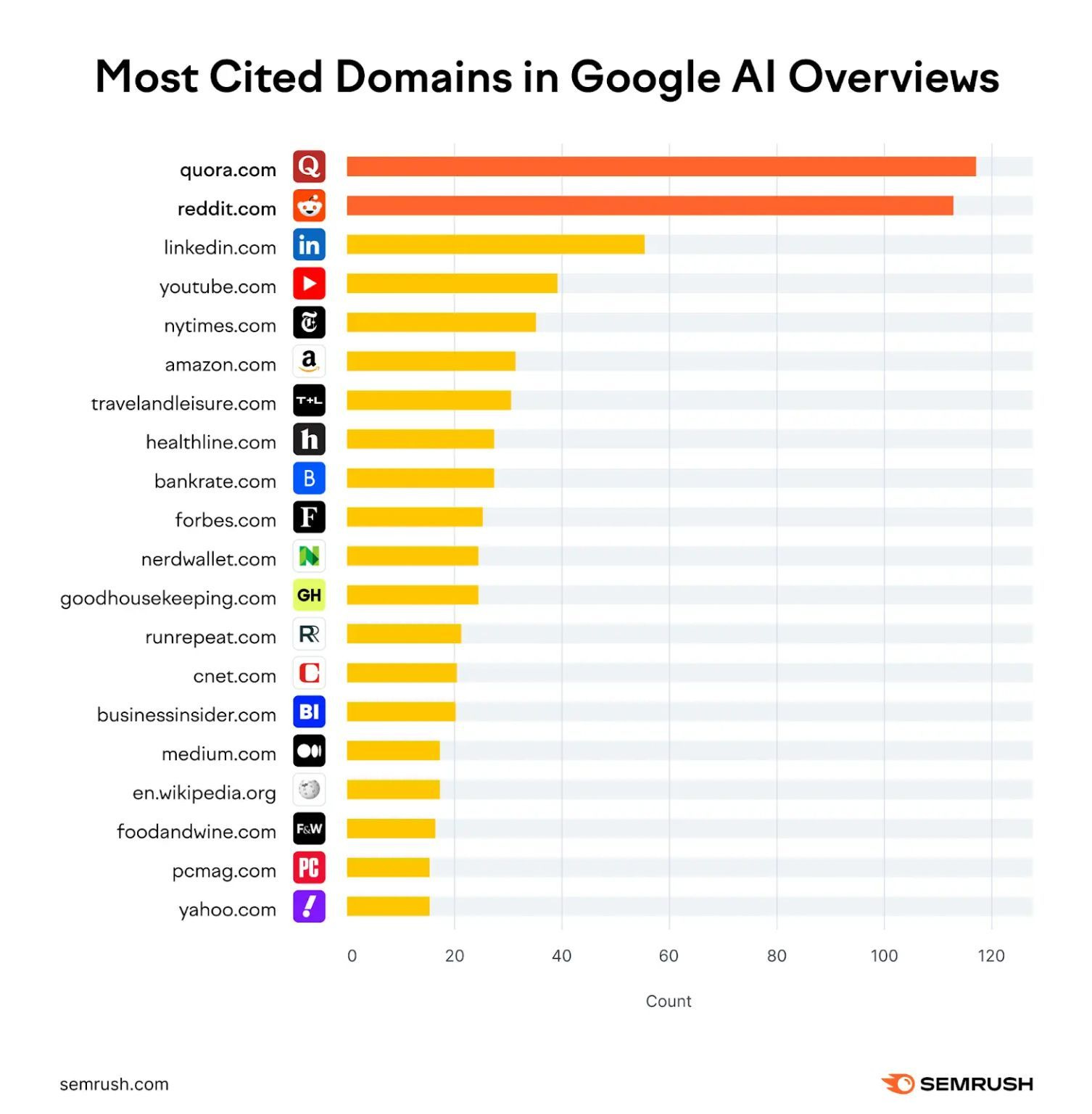
Engaging authentically on Reddit (which LLMs heavily weight because of licensing deals with OpenAI/Google)
The hybrid skill set is going to be extremely valuable: someone who can do technical SEO and digital PR.
Also: learn how to talk to AI. Not “prompt engineering” in the gimmicky sense, but understanding how LLMs read, parse, and prioritize content. That’s a real skill now.
So what now? Use AI to optimise for AI, duh.
Here’s a practical starting point for any marketing manager:
1. Ask AI for your “to-do list.”
Go to your chatbot of choice (we all know it’s Grok’s new Spicy mode). Ask it to recommend companies in your category. If you’re not listed, ask why.
The AI will literally tell you what’s missing: “You’re not mentioned in major industry publications,” or “I don’t see reviews on G2.”
It gives you a to-do list for free.
2. Map your “mention gaps.”
Where are your competitors being talked about that you’re not? Reddit threads. Industry newsletters. Comparison articles. Podcast appearances.
These are your PR targets.
But you can’t just publish generic content and expect mentions. LLMs prioritize unique value. Think original data, contrarian opinions, or unique insights that don’t exist elsewhere in the training set.
To earn mentions, you need to be the source of something new. Publish original research. Share first-party data. Take a specific stance that adds to the conversation.
Like this newsletter for example, amirite?
3. Optimize sections, not just pages.
Remember: ChatGPT doesn’t read top-to-bottom. It jumps to relevant sections. So:
Lead each section with the key information
Use clear, scannable headings
Add unique data points (pages with 19+ data points get 5.4 citations on average vs. 3.2 for sparse pages)
Kill the vague metaphors. LLMs can misinterpret creative language
4. Think entities, not keywords.
Old question: “What keywords should I rank for?” New question: “What associations should I build?”
You want the LLM to learn: [Your Brand] = [Your Category]. That association is built through mentions, not meta tags.
5. Make yourself machine-readable.
PR gets you mentioned. But there’s a technical bridge too: AI agents need to understand what you’re selling.
This means structured data. Schema markup. JSON-LD. Your product features, pricing, and specs must be machine-readable so AI agents can retrieve them accurately.
Gartner predicts traditional SEO and PPC will give way to Agent Engine Optimization (AEO). To succeed, products must be parseable by AI. If an agent can’t read your specs, it can’t recommend you.
6. Don’t abandon Google.
This is important. AI search is the future, but it’s not the present. 96% of sites get zero AI traffic. Google is still 373x bigger.
Do both. But recognize they’re different games now.
That’s it for this prediction. Agree/disagree? Got remarks? Roast me in the comments.
What’s next? AI decides what we buy now.
Tomorrow: Prediction #3; AI becomes the gatekeeper standing between you and your customers.
Spoiler: 24% of consumers already use AI shopping assistants. And they’re not just gatekeepers—they’re becoming “Agents of Customers,” making buying decisions on behalf of humans.
Cheers, Kasper